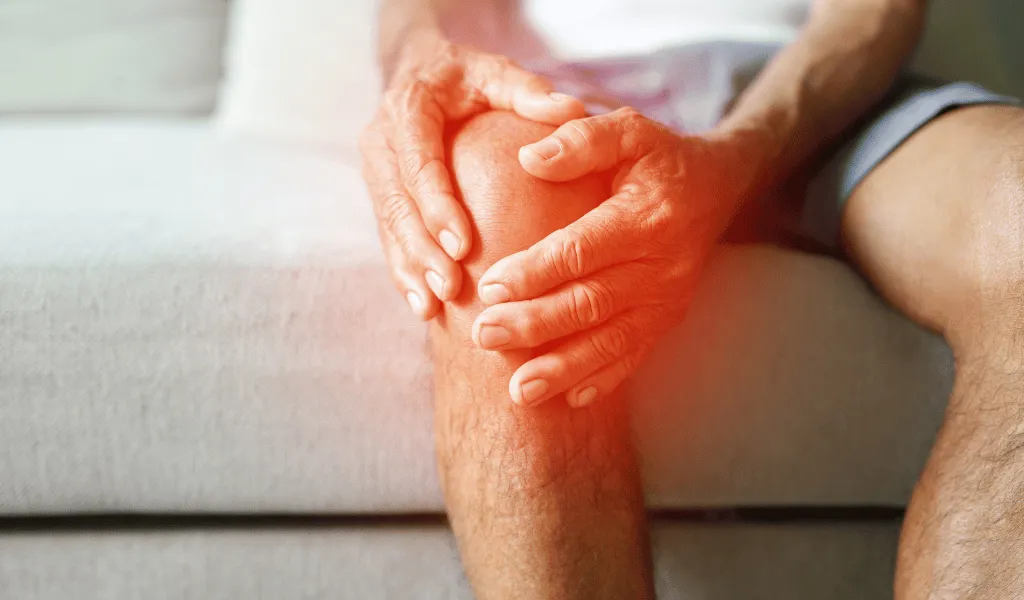
Knee pain limits your ability to walk, climb stairs, exercise, and enjoy everyday activities. At Quest Chiropractic And Acupuncture in Itasca, IL, we take a whole-body approach to knee pain that goes beyond the knee itself to identify and correct the biomechanical issues contributing to your symptoms. Patients from Itasca, Wood Dale, Roselle, Bloomingdale, and the surrounding communities rely on our team for effective, non-surgical knee pain solutions.
What Is Knee Pain?
The knee is one of the largest and most complex joints in the body. It consists of bones (femur, tibia, patella), cartilage (meniscus and articular cartilage), ligaments (ACL, PCL, MCL, LCL), tendons, and a fluid-filled capsule. Dysfunction in any of these structures can produce knee pain.
Common causes of knee pain include osteoarthritis, patellofemoral syndrome (runner’s knee), meniscus tears, ligament sprains, tendonitis (particularly patellar tendonitis and IT band syndrome), and bursitis. However, knee pain is frequently the result of problems elsewhere in the kinetic chain. Misalignment in the pelvis, hips, or ankles alters the way forces are distributed through the knee, creating abnormal wear and stress on the joint.
Symptoms range from a dull ache that worsens with activity to sharp pain with specific movements, swelling, stiffness, clicking or popping, and a feeling of instability. The location and pattern of your knee pain provides important diagnostic clues that guide our treatment approach.
How We Treat Knee Pain
Our evaluation considers the knee joint itself and the entire lower extremity kinetic chain. We assess your gait, hip and ankle alignment, pelvic balance, muscle strength and flexibility, and the specific structures within the knee. This comprehensive approach is what allows us to find and address the root cause rather than just treating the symptom.
Chiropractic adjustments to the knee, hip, pelvis, ankle, and foot can correct alignment issues that place abnormal stress on the knee joint. When the joints above and below the knee are functioning properly, the knee is no longer subjected to the uneven loading that causes pain and degeneration.
Acupuncture is effective for reducing knee pain and inflammation, and research supports its use for conditions like osteoarthritis. Soft tissue therapy addresses tight muscles and fascia, particularly the IT band, quadriceps, and hamstrings, which directly influence knee mechanics.
Rehabilitation exercises are central to knee pain treatment. We prescribe strengthening exercises for the quadriceps, hamstrings, and hip stabilizers, along with flexibility work for the muscles and connective tissues that cross the knee joint. Orthotics may be recommended if foot or ankle alignment is contributing to your knee problem.
Benefits of Chiropractic Care for Knee Pain
- Correction of biomechanical dysfunction driving knee stress
- Reduced pain and inflammation without medication
- Improved joint alignment throughout the lower extremity
- Strengthened supporting muscles for greater knee stability
- Restored range of motion and functional capacity
- Delayed or avoided need for knee surgery
- Improved gait and movement mechanics
- Treatment of contributing factors, not just symptoms
Why Choose Quest Chiropractic And Acupuncture
Many patients are surprised to learn that their knee pain is related to problems in the hip, pelvis, or foot. Our whole-body evaluation catches these connections and addresses them as part of your treatment plan. Combining chiropractic adjustments, acupuncture, soft tissue work, and rehabilitation gives you the best chance of a full recovery and lasting results.
Our Itasca office provides the expertise and range of services needed to manage knee pain conservatively and effectively.
Frequently Asked Questions
Can chiropractic care help with knee arthritis? Yes. While chiropractic care cannot reverse existing cartilage damage, it can reduce the rate of further degeneration by improving joint alignment and mechanics. Correcting the way forces are distributed through the knee takes abnormal stress off damaged cartilage and can significantly reduce pain. Acupuncture and rehabilitation exercises further support arthritic knee management.
Do I need an MRI before starting treatment? Not necessarily. Our clinical examination can identify many common knee conditions without imaging. If our evaluation suggests a condition that requires imaging for confirmation — such as a significant meniscus tear or ligament rupture — we will refer you for appropriate studies. In many cases, conservative treatment can begin immediately based on clinical findings.
How does hip or foot alignment affect my knee? The knee sits between the hip and the ankle in the kinetic chain. If your hip drops on one side due to a pelvic imbalance, it changes the angle at which your femur meets the tibia, increasing stress on the knee. Similarly, flat feet or excessive pronation at the ankle rotates the lower leg inward, pulling the knee out of alignment. Correcting these upstream and downstream issues is often the key to resolving persistent knee pain.
Take the next step toward pain-free movement. Call Quest Chiropractic And Acupuncture at (847) 320-0859 or request an appointment online to start treating the real cause of your knee pain.